 Subscribe Now
-

- Ayan Ahmed
- 2 weeks ago
African Academy for Women in Political Leadership Opens with 40 Leaders from Africa and the Caribbean
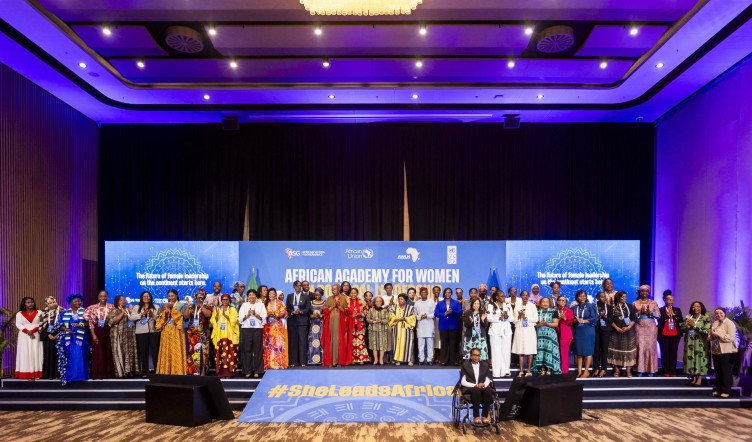
The United Nations Development Programme (UNDP), in collaboration with the African School of Governance (ASG), the African Union Commission (AUC) and the African Women Leaders Network (AWLN), has completed a five-day launch and induction programme for the African Academy for Women in Political Leadership. The event took place in Kigali, Rwanda, from 3 to 7 August 2026.
The Academy’s first group comprises 40 women political leaders chosen from more than 1,300 applicants representing 28 African countries and the Caribbean. The participants include cabinet ministers, members of parliament, mayors, governors, senators, political party leaders and young women preparing for future leadership roles. More than 60 per cent are from countries expected to hold presidential or parliamentary elections within the next two years, positioning the Academy’s executive training programme to support women working in active political campaigns and public institutions.
The Academy was officially inaugurated on 3 August, with representatives from the Rwandan government, former heads of state and government, ministers, parliamentarians, development partners, academics, private-sector representatives, civil society organisations and the media in attendance.
Francis Gatare, President of the African School of Governance, described the programme as an opportunity for participants to exchange knowledge, learn from one another and strengthen their existing leadership skills. He emphasised that the relationships formed through the Academy could establish a lasting support network throughout their careers.
The establishment of the Academy marks a significant investment in Africa’s democratic development. It aims to strengthen the role of women in building effective institutions, improving democratic governance and promoting peace, security and sustainable development across the continent.
H.E. Bineta Diop, Co-Convenor of the African Women Leaders Network, said the launch represented more than the creation of another institution. She described it as an important milestone for the network, which has spent years advocating for women’s leadership. According to Diop, the initiative signals a shift from promoting women’s participation to putting that commitment into practice.
Alongside the launch, UNDP and the African School of Governance Foundation signed a five-year Memorandum of Understanding to establish a continent-wide framework for advancing women’s transformative leadership. The agreement outlines cooperation in governance and political leadership through the Academy, expanding its reach to women across Africa, providing learning opportunities for Africa Young Women Leaders (AfYWL) fellows and developing alumni networks that contribute to the African Union’s Agenda 2063 and the Sustainable Development Goals (SDGs). It also includes collaboration with national women’s networks and political forums, as well as adapting leadership training to different local contexts and languages.
The Academy’s curriculum addresses the structural and financial challenges that prevent qualified women from entering political office. In addition to training in political leadership, coalition-building, communication and ethical governance, participants receive practical instruction on campaign financing.
Dr. Jide Okeke, Director of the UNDP Regional Programme for Africa, stressed that measuring women’s political progress should involve more than counting how many enter public office. He argued that attention must also be given to the influence they exercise once elected. He noted that many capable women face obstacles related to funding, security and political alliances, estimating that contesting a parliamentary seat on the continent can cost an average of US$40,000.
Okeke explained that the Academy addresses campaign financing directly, alongside legislative skills, coalition-building, communication and ethical leadership. He maintained that excluding financial education from leadership training would disadvantage women seeking to compete effectively in politics.
Another central element of the programme is its commitment to developing emerging leaders alongside experienced politicians. By bringing together women at different stages of their political careers, the Academy seeks to encourage intergenerational learning and strengthen the future pipeline of women leaders.
H.E. Ambassador Bankole Adeoye, African Union Commissioner for Political Affairs, Peace and Security, said the question of whether African women are capable of leading has already been answered by history. He argued that the priority now is ensuring institutions recognise, support and benefit from their leadership. Adeoye reaffirmed the African Union’s commitment to moving beyond advocacy towards the deliberate development of capable, ethical and transformative women leaders.
During the five-day induction, participants completed the Academy’s introductory modules, covering the history of African women’s political authority, political financing and the relationship between money and power, public visibility and political communication, coalition-building and political institutions, and leadership resilience. The sessions included practitioner-led workshops, discussions, practical learning clinics and peer exchanges.
The programme also featured an extended discussion between participants and several prominent political figures, including H.E. Sahle-Work Zewde, former President of Ethiopia; H.E. Catherine Samba-Panza, former President of the Central African Republic; H.E. Dr. Nkosazana Dlamini Zuma, former Chairperson of the African Union Commission; Hon. Victoire Tomégah-Dogbé, former Prime Minister of Togo; and Rt. Hon. Lamein Blanchette, Speaker of Parliament of Saint Kitts and Nevis.
Other activities included a high-level dialogue with Rt. Hon. Justice Domitilla Mukantaganzwa, Chief Justice of Rwanda, and a virtual session with H.E. Ahunna Eziakonwa, the United Nations Secretary-General’s Special Adviser on Africa. Participants also visited the Kigali Genocide Memorial to reflect on the devastating consequences of failed leadership and the importance of visionary governance and reconciliation in rebuilding a nation.
The residential programme in Kigali marks the beginning of a four-week learning initiative. Participants will continue with three weeks of online training, structured mentorship and peer-support groups known as sister circles. The programme will then transition into ongoing alumni engagement, designed to maintain professional connections and support women throughout political campaigns, legislative terms and their time in public office.
Source: https://www.undp.org/africa/press-releases/african...
0 Comments
Please Sign in to post comments - Sign in or Register
Explore Topics
Popular Posts
Benin Secures Four Nominations at the 2026 Africa Tourism Awards
The history of Africa is central to the story of the modern world — Africa needs to write itself back into history
Mampoer, Masters of Literature and Rich Heritage: Why Groot Marico Belongs on Your Travel Bucket List